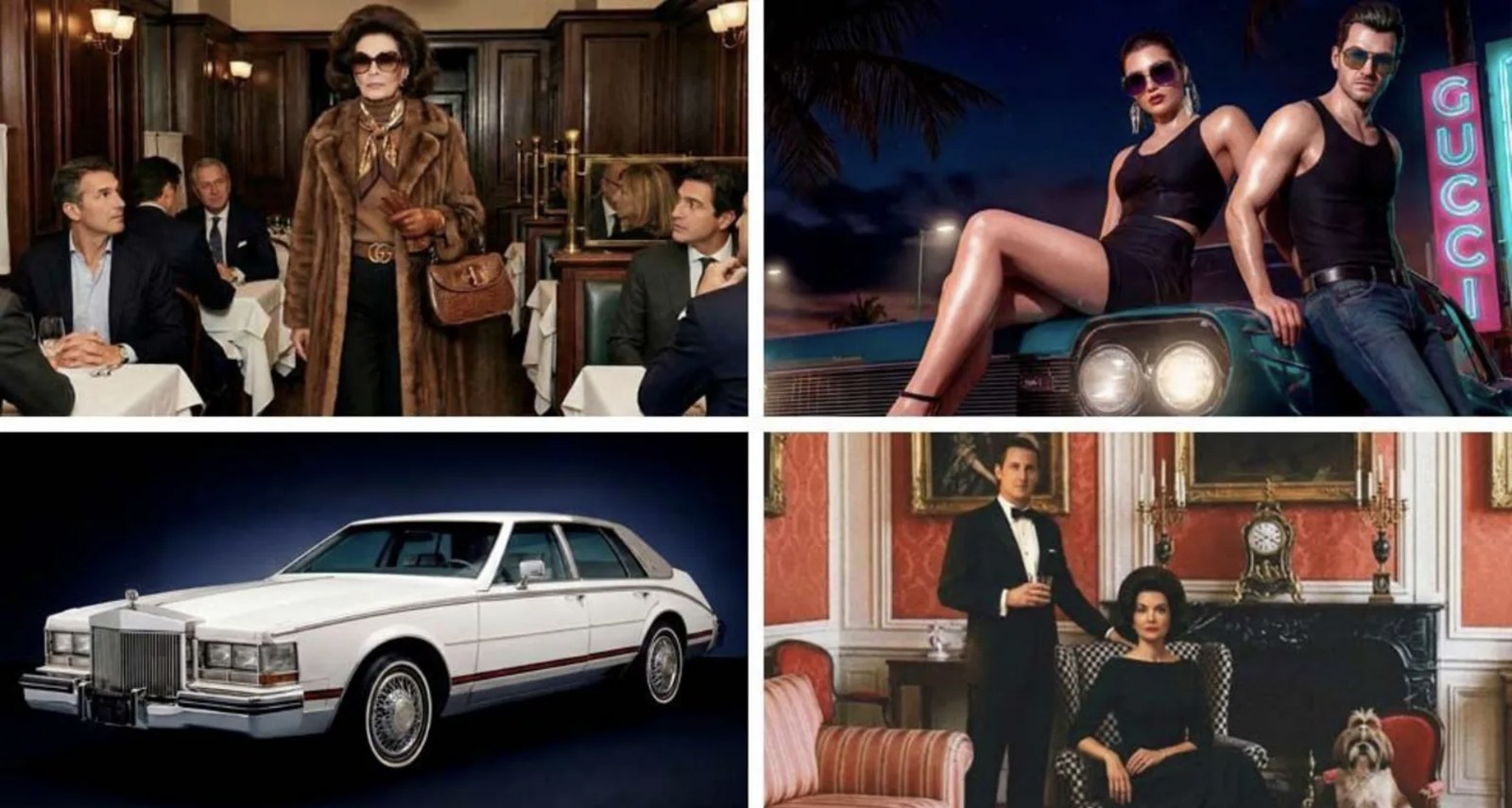
A few words typed into a text box are now all it takes to get an image. This gesture, now commonplace, has upended the visual landscape, and brands are already paying the price. Earlier this year, the AI-generated visuals Gucci released for its Milan show were called “cheap” and “lazy” by part of the public. According to a Harris poll, 73% of consumers trust an ad less when they suspect it was made with AI.
In response, another trend has emerged: certifying the human. At least eight initiatives are trying to establish a global label, modelled on fair trade. I’m an art director and a photographer, and I don’t believe in it.
A sudden power
This upheaval is first of all a human one. AI has become so accessible that people with no visual training suddenly felt endowed with an ability they had always lacked. I have nothing against the urge to create. What bothers me is what gets sacrificed along the way: the basic rules, and the time it takes to ask what the image needs to say. Instead, people rush to post the result on social media, like a newly acquired power.
Skills displaced: photography has been here before
AI displaces skill more than it eliminates it. Photographers know this better than anyone. Affordable prosumer cameras, then smartphones with ever more impressive capabilities, turned everyone into a photographer. Professional commissions declined, especially for the simplest jobs. The profession did not disappear, but the market split in two. The “good enough” image became free, and the one that carries a point of view gained in value.
AI is replaying the same script. Some use it to push their work further: exploring more avenues, testing an idea, freeing up time to think. Others want an instant result, in the service of a message with no substance. The real line runs between rigour and convenience, far more than between human and machine.
“Owning a camera never made anyone a photographer. Owning an AI won’t make anyone a creative either.”
Rathana Lean
The label: an organic sticker for creativity
The comparison is deliberate: in the United Kingdom, Books By People already issues a certification called “Organic Literature”. Like organic food, the “human” label reassures, eases consciences and justifies a higher price. My objection is that we buy a label before we buy a work.
Do we really need a badge to appreciate an image? A generated creation is still guided by someone, who chose what to ask for and what to keep. Only a trained eye can judge it, and that is exactly what the label sets aside.
That leaves the most serious objection: copyright. AI models learned from existing works, often without their creators’ consent. The concern is legitimate for those who make a living from their work. But humans do the same thing, only more slowly: photographs, paintings and drawings have always fed the people who look at them. Inspiration has always been part of creating. What needs fighting is copying, whether by hand or by machine.
From calculator to supercomputer
The history of technology usually follows the same path. The internet was born in US defence laboratories. GPS guided missiles before it guided our cars. Supercomputers remained the domain of researchers. Each time, the tool was first entrusted to trained, supervised people for whom using it was part of the job.
AI breaks with this pattern. For the first time, a technology this powerful has landed directly in everyone’s hands, with no training, no framework and no filter. The effects are already visible: misleading images and empty messages flooding our feeds. No badge will replace that framework. It will come from educating the eye, and from the high standards of those who commission work as much as those who create it.
What this means for brands
For businesses, and especially small and mid-sized companies discovering these tools, the real question is how to use AI.
- Start with the message. Know what you want to say, and to whom, before generating anything.
- Keep a human eye on every decision. Quality is decided in the choice of idea, the selection, the retouching and the consistency with your identity.
- Show your process. Your clients trust a way of working far more than a certification logo.
“When images can be made in a single click, value shifts to discernment, which cannot be generated.”
Rathana Lean
Sources: The Cut Fashion Academy, Kompozy, Dig Watch, Wikipedia – No-AI label. Photo: Ehud Neuhaus, Unsplash.
À lire aussi
Diptyque × Jean-Simon Roch: a Christmas shaped by hand
Gilded candles, glittering gift sets, ever more spectacular calendars: at…